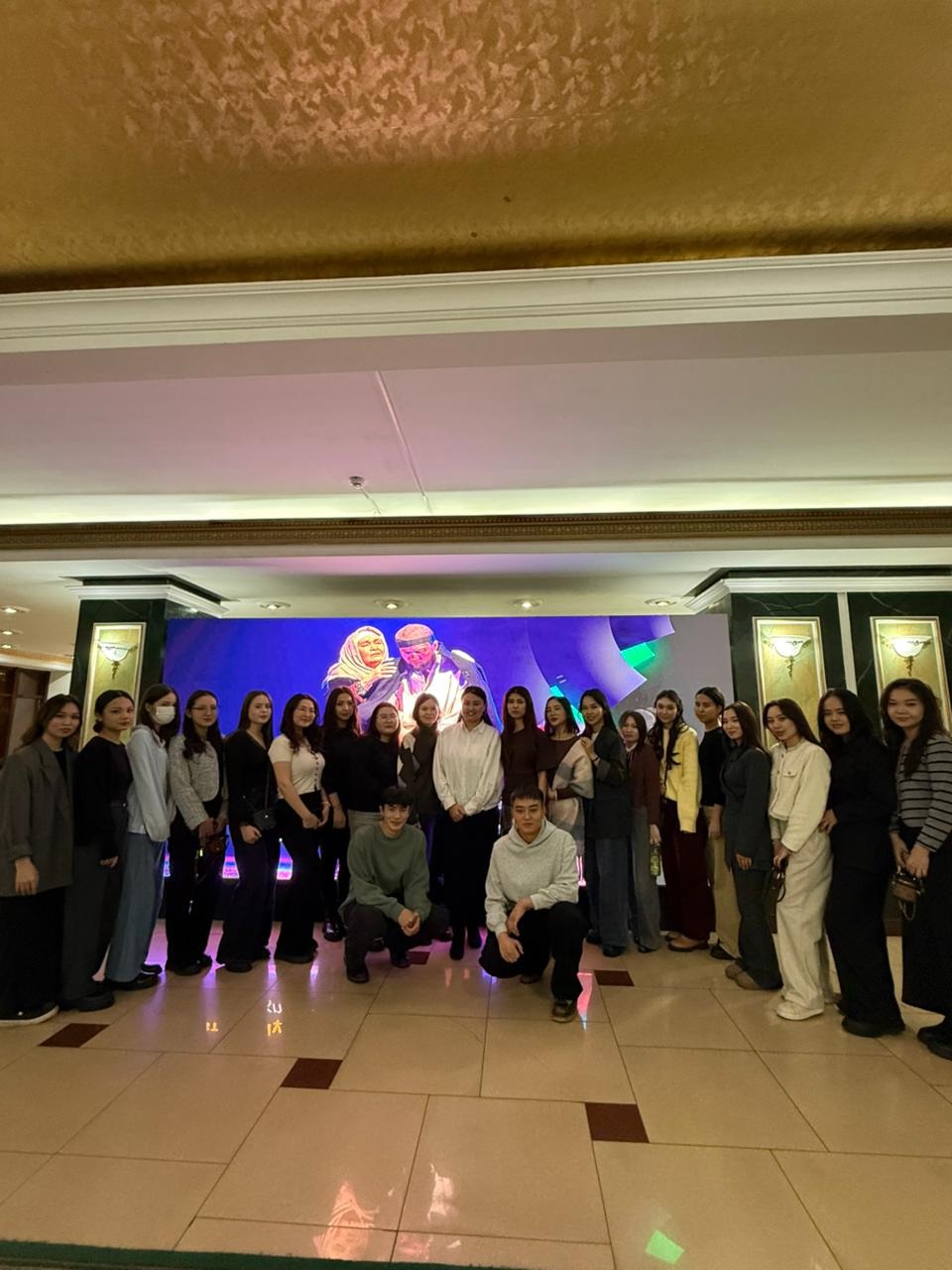
On February 10, 2026, second-year students of the Department of Foreign Philology and Translation Studies at the Faculty of Philology, Farabi Kazakh National University, visited the Gabit Musrepov Youth Theater to watch the play “Әpke” (“Sister”). This visit, organized as part of SDG 4 “Quality Education,” offered students an emotional and cultural experience, immersing them in the world of human emotions, family values, and social relationships.
The play tells the story of the main character, the eldest sister, who takes responsibility for her younger siblings at an early age. Despite her family’s hardships, she sacrifices her own dreams and personal happiness for the sake of her loved ones. From the very first scenes, the audience feels the weight of her choices and understands how strong and selfless a woman can be when faced with difficult circumstances.
The plot unfolds through several key events: the sister helps her younger siblings with their studies, provides them with moral support, faces misunderstanding from adults, and even during moments of personal despair maintains her inner strength. The actors skillfully conveyed the emotions of the protagonist: scenes of loneliness, worry, and internal struggle kept students deeply engaged. Particularly striking were the moments where the sister faces the choice between duty to her family and her own desires — these scenes evoked genuine empathy from the audience.
Students noted that the play encourages reflection on the role of women in the family and society, highlighting the importance of balancing care for loved ones with preserving personal values and aspirations. The vibrant stage design, music, and natural acting allowed the audience to fully immerse themselves in the story.
After the performance, students discussed what they had seen, shared impressions, and analyzed the protagonist’s actions. These discussions helped them not only understand the plot more deeply but also develop skills in interpreting artistic texts and critical thinking — essential abilities for future philologists and translators.
Visiting the Youth Theater was part of the department’s program aimed at familiarizing students with national cultural heritage and fostering cultural awareness. Activities like this broaden students’ horizons, shape value systems, and teach them to see art not only as entertainment but also as a source of life lessons.
Thus, the play “Әpke” once again demonstrated that theater is a place to experience, learn, and understand the world through human relationships and emotions. For students, this visit was not only a cultural but also a personal experience that will leave a lasting impact on their perception of art and life.
Senior Lecturer of the Department of Foreign Philology and Translation Studies
Aushenova A.S.
Students Experience the Power of Family: The Play “Әpke” at the Gabit Musrepov Youth Theater