
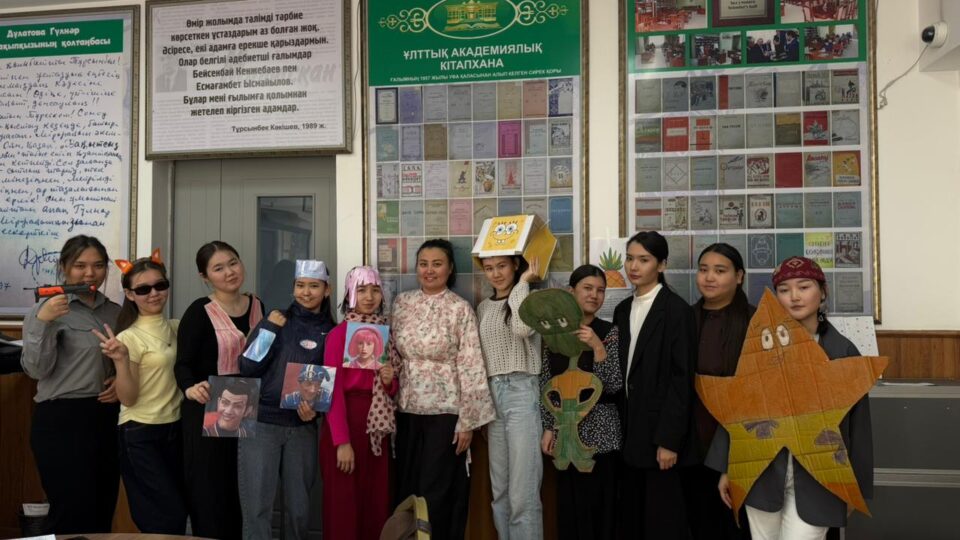
On March 26, 2026, second-year students of the Department of Foreign Philology and Translation Studies at the Faculty of Philology of Al-Farabi Kazakh National University took part in the interactive show “World of Characters — an interactive show with characters.” The event was held במסגרת the implementation of Sustainable Development Goal No. 3 — “Good Health and Well-being” — and became part of a comprehensive approach to fostering a well-rounded and harmonious student personality.
Today, the educational environment is expanding beyond the classroom, integrating cultural and social practices into the learning process. Participation in such events not only diversifies student life but also has a direct impact on emotional well-being, engagement levels, and the quality of interpersonal interaction.
The main objective of the students’ participation was to become familiar with modern formats of interactive leisure, as well as to develop communication skills, observational abilities, and emotional responsiveness. During the event, participants interacted with characters from popular cultural projects, including SpongeBob SquarePants and characters from LazyTown, as well as various costumed performers.
Immersion in a playful and creative atmosphere allowed students to temporarily step away from academic pressures, shift their focus, and restore emotional resources. Live interaction with the characters generated genuine interest and a positive response, becoming not only a source of vivid impressions but also a basis for meaningful discussion.
“Emotional well-being is not a luxury, but a necessary condition for effective learning and personal growth,” participants noted, emphasizing the importance of maintaining psychological balance in the context of an intensive educational process.
The collective format of the event was of particular importance. Joint participation contributed to the development of teamwork, strengthening of interpersonal connections, and the creation of an atmosphere of mutual support. Students exchanged impressions, discussed what they had seen, and shared their own interpretations, which fostered the development of critical thinking and communication skills.
In addition, participation in the show broadened students’ cultural horizons and allowed them to view familiar images through the lens of analysis and interpretation. Such activities stimulate not only emotional engagement but also intellectual involvement, shaping a holistic perception of the surrounding world.
This initiative is part of the department’s educational strategy aimed at improving the quality of specialist training through the integration of cultural experience into the learning process. Such activities contribute to the development of both professional and personal competencies necessary for future philologists and translators.
Thus, participation in the interactive show became not merely an मनोरंजन event, but a meaningful element in fostering students’ emotional well-being. In the face of modern challenges, it is precisely these forms of activity that help maintain a balance between academic workload and psychological state, creating a foundation for sustainable and harmonious personal development.